
Cat Body Condition Score (BCS 1–9) & Ideal Weight Tool
Evaluates your cat's body condition on the 9-point WSAVA scale and calculates estimated ideal target body weight.
Parameters
Veterinary & Scientific Reference Standard:
This calculated report is generated by AnimalCalculators.com using peer-reviewed physiological, metabolic, and nutritional equations (NRC/WSAVA/FAO). It is intended for educational, clinical, and agricultural guidance.
This calculator provides evidence-based estimates derived from published veterinary equations (NRC, WSAVA, FAO). Outputs are intended for educational and decision-support guidance only. Always consult a licensed veterinarian or qualified specialist for clinical diagnosis, treatment planning, or prescription drug administration.
WSAVA Feline Body Condition Score (BCS 1–9) Chart
Official feline palpation checkpoints & abdominal tuck evaluation
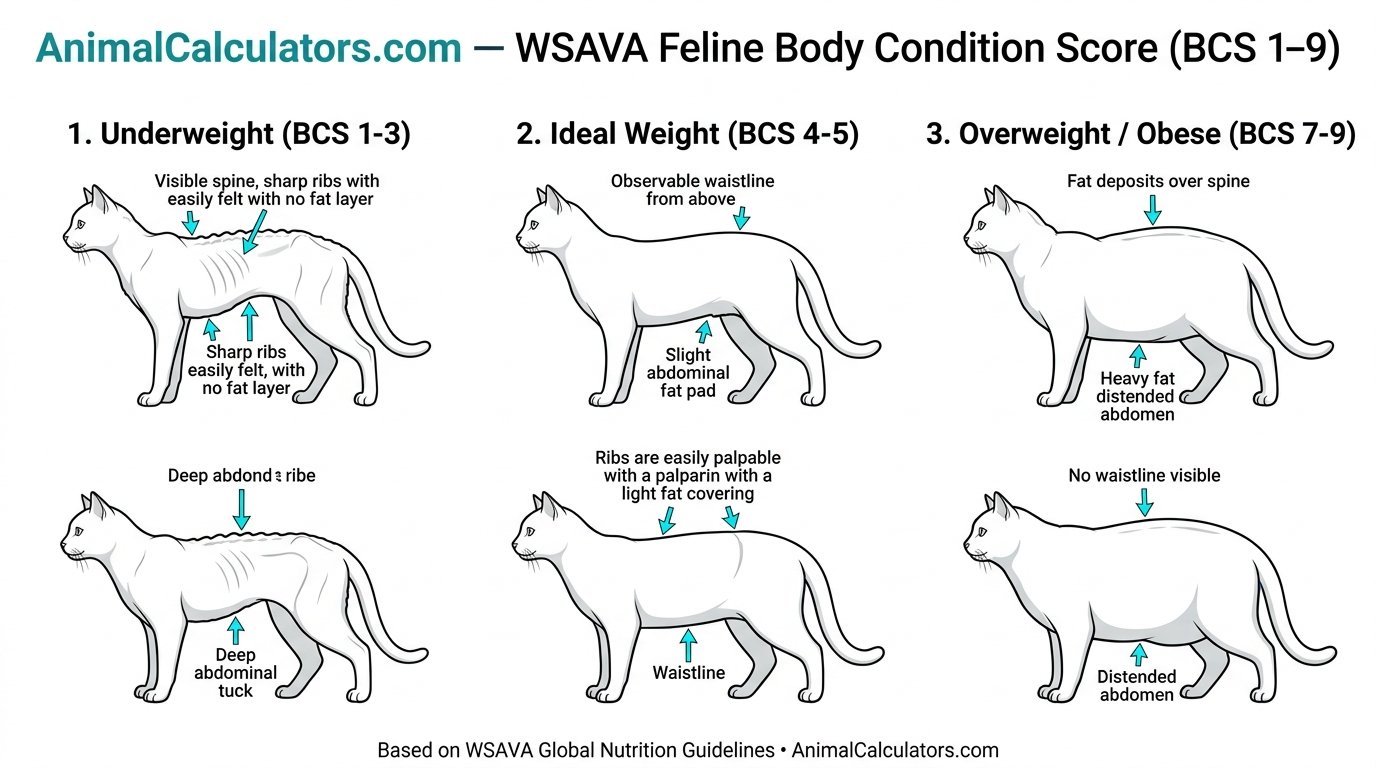 Click to enlarge
🟡 Underweight (BCS 1–3)
Visible spine, sharp ribs easily felt with zero fat covering. Pronounced abdominal tuck.
🟢 Ideal Weight (BCS 4–5)
Well-proportioned, slight abdominal fat pad (primordial pouch), ribs easily palpable with light fat.
🔴 Overweight / Obese (BCS 7–9)
Heavy fat cover over ribs, no waistline visible, rounded distended abdomen with lumbar fat deposits.
Understanding the Cat Body Condition Score (BCS 1–9) & Ideal Weight Tool
What This Calculator Does
This cat body condition score tool helps you assess whether your cat is at a healthy weight using the official WSAVA 1–9 veterinary scale. Feline obesity is the most prevalent nutritional disorder in companion cats, increasing risks of diabetes mellitus, urinary disease, and osteoarthritis.
How to Use This Calculator
Enter your cat's current weight and select their body condition score based on gentle palpation of the ribs and spine, dorsal waist evaluation, and abdominal profile inspection. The calculator computes their estimated ideal target weight and safe calorie adjustments.
Key Factors That Affect the Result
- Rib palpation: Ribs should be easily felt under a light layer of subcutaneous fat without pressing hard.
- Dorsal waistline: Looking straight down from above, an hourglass waistline should be clearly discernible behind the ribcage.
- Abdominal tuck: Viewing from the side, the abdominal line should incline upward from the end of the sternum toward the pelvis.
- Primordial pouch vs. abdominal fat: Distinguish between the natural protective skin fold and firm fat deposits over the lumbar spine and chest.
Why This Matters for Your Cats
Maintaining an ideal body condition (BCS 5) extends your cat's lifespan by up to 1.8 years and significantly reduces the incidence of feline type 2 diabetes, non-allergic dermatitis, and cruciate ligament tears.
Veterinary Advisory: This calculator provides educational weight guidance based on WSAVA clinical standards. Never place a cat on a crash diet. Consult your veterinarian for a structured, calorie-controlled weight management plan.
Reviewed & verified by Dr. Imad Khan, DVM, MSc · Doctor of Veterinary Medicine & Masters in Poultry Science · View editorial credentials →
Formula & Mathematical Methodology
Formula Variables Defined
1 (Emaciated) to 9 (Severely Obese), where 5 is Ideal
Step-by-Step Calculation Example
An indoor domestic shorthair cat weighing 5.4 kg (12 lbs) with BCS 7 (Heavy / Moderately Obese).
- BCS 7 is 2 points above ideal (BCS 5)
- Each point represents roughly ~10% excess mass
- Ideal Weight = 5.4 kg ÷ 1.20 = ~4.5 kg (~10.0 lbs)
Key Assumptions
- Visual inspection and gentle palpation align with WSAVA cat physical scoring criteria.
Biological Limitations
- Older cats may experience muscle wasting (sarcopenia) over the spine that can mask true abdominal fat.
Verified Scientific & Veterinary Sources
Cat Body Condition Score (BCS 1–9) & Ideal Weight Tool — FAQs
Related Calculators & Tools
All Cats CalculatorsComputes resting energy (RER) and daily maintenance energy (MER) for cats and kittens based on weight, neuter status, and activity.
Calculates exact daily wet food cans, 85g pouches, and dry kibble cups or grams based on your cat's body weight, neuter status, and preferred wet/dry feeding ratio.