
Hen-Day Egg Production: Calculation Guide & Why Chickens Stop Laying
Learn how to calculate Hen-Day Egg Production % for backyard or commercial flocks. Understand breed benchmarks, seasonal laying curves, and how to fix sudden egg drops.
Key Technical Takeaways
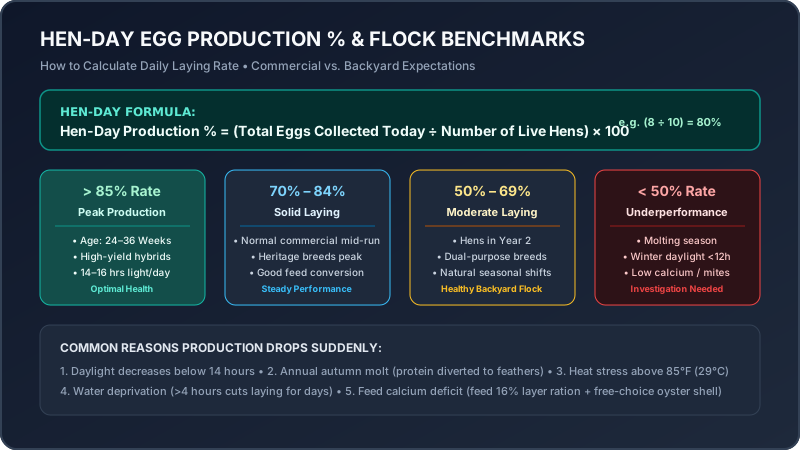
- •Hen-Day Egg Production measures the percentage of live hens that lay an egg on any given day: (Total Eggs ÷ Number of Hens) × 100.
- •Peak commercial hybrid production reaches 90% to 95% between 24 and 32 weeks of age, while standard heritage flocks average 60% to 75%.
- •Daylight length is the primary hormonal trigger for laying: hens require at least 14 to 16 hours of light per day to sustain peak egg production.
- •Water deprivation for as little as 4 to 6 hours can depress egg laying for up to two weeks.
- •During the annual autumn molt, hens divert dietary protein away from egg formation to rebuild feathers.
For backyard flock keepers and small-scale poultry farmers, tracking daily egg collection is the single best way to monitor flock health and feed efficiency. If you have 10 hens and collect 8 eggs today, your flock achieved an 80% Hen-Day Production rate.
This guide explains how to calculate Hen-Day Egg Production, benchmarks for different breeds, the six real reasons chickens suddenly stop laying, and how to balance feed and calcium for strong eggshells.
1. What Is Hen-Day Egg Production?
Hen-Day Production (HDP) is the global standard metric used by poultry scientists and homesteaders to evaluate the daily laying efficiency of a flock based on the actual number of live hens present.
Worked Example:
- •You enter your coop in the evening and collect 24 eggs.
- •Your flock currently has 30 laying hens.
- •Calculation: (24 ÷ 30) × 100 = 80.0% Hen-Day Production.
Calculate Your Flock's Daily Laying Rate with Our Hen-Day Calculator
Calculate accurate, personalized recommendations with our free evidence-based tool.
2. Laying Rate Benchmarks by Breed & Age
How many eggs should you realistically expect? Hen performance depends heavily on breed genetics and flock age:
| Breed Category | Popular Examples | Peak Production % | Annual Eggs per Hen | Typical Characteristics |
|---|---|---|---|---|
| Production Hybrids | ISA Brown, Golden Comet, Leghorn | 90% to 96% | 280 to 320+ | Exceptional feed conversion; short 2-year commercial lifespan |
| Dual-Purpose Heritage | Rhode Island Red, Plymouth Rock, Sussex | 70% to 82% | 200 to 260 | Hardy in winter; larger meat carcass; productive for 3–4 years |
| Heavy Heritage Breeds | Orpington, Australorp, Wyandotte | 60% to 75% | 180 to 220 | Calm temperament; prone to broodiness; steady winter layers |
| Ornamental & Bantams | Silkie, Polish, Frizzle | 35% to 50% | 90 to 140 | Kept primarily as pets; frequent broodiness; smaller eggs |
3. Why Did My Chickens Suddenly Stop Laying?
A sudden drop in daily egg count is rarely random. Check these six universal environmental and nutritional triggers:
- 1Decreasing Day Length (Photoperiod): Hens require 14 to 16 hours of light per day to stimulate the pineal gland and release pituitary hormones (FSH and LH) necessary for ovulation. In autumn and winter, when natural daylight drops below 12 hours, egg production naturally halts.
- 2The Annual Molt (Autumn): Between 16 and 18 months of age, chickens shed old, ragged feathers and grow fresh plumage. Feathers are composed of over 85% keratin protein. During molting, hens divert nearly all dietary protein into feather growth, temporarily shutting down egg production for 8 to 12 weeks.
- 3Severe Heat Stress (above 85°F / 29°C): Chickens cannot sweat. When panting to cool down, they hyperventilate, lowering blood carbon dioxide and calcium levels, leading to thin-shelled eggs or complete cessation of laying.
- 4Water Disruption: Eggs are 65% water. If waterers freeze in winter or run dry in summer for just 4 to 6 hours, hens can stop laying for up to two weeks.
- 5Predator Fright or Coop Relocation: High stress releases corticosterone, which disrupts the ovulatory cycle for 3 to 7 days.
- 6Hidden Nests or Egg Eating: If hens free-range, inspect quiet bushes, under porches, or tall grass before assuming they stopped laying.
4. Feed & Calcium Balancing for Strong Shells
Forming an eggshell requires approximately 2.0 to 2.2 grams of pure elemental calcium every 24 to 26 hours. If dietary calcium is deficient, the hen's body will dissolve calcium from her own skeletal bones (medullary bone) to shell the egg, leading to cage layer fatigue and osteoporosis.
Feeding Rules for Optimal Laying:
- •Feed Complete 16% to 18% Layer Pellets: Never dilute commercial layer feeds with more than 10% scratch grains or corn. Scratch grain is low in protein (8%) and virtually devoid of calcium.
- •Provide Free-Choice Crushed Oyster Shell: Offer coarse oyster shell or clean, baked, crushed eggshells in a separate hopper beside the feeder. Hens will self-regulate their intake based on their egg-forming schedule.
- •Boost Protein During Molting: Switch to a 20% protein grower/finisher ration or supplement with black soldier fly larvae or cooked eggs during autumn feather regrowth.
Calculate Incubation & Hatch Dates for Your Poultry
Calculate accurate, personalized recommendations with our free evidence-based tool.
Reviewed & verified by Dr. Imad Khan, DVM, MSc · Doctor of Veterinary Medicine & Masters in Poultry Science · View editorial credentials →