
Lilies and Cats: True Lily Toxicity, Warning Signs & Emergency Care
Every part of a true lily is lethal to cats. Learn to distinguish deadly True Lilies (Lilium/Hemerocallis) from peace lilies, recognize early symptoms, and act fast.
Key Technical Takeaways
- •Every single part of a True Lily (Lilium and Hemerocallis species) — petals, leaves, stems, pollen, and even vase water — is deadly to domestic cats.
- •Ingestion of less than one leaf or a few microscopic pollen grains groomed from fur causes acute proximal renal tubular necrosis (kidney failure).
- •"False lilies" like Peace Lilies and Calla Lilies contain insoluble calcium oxalate crystals; they cause severe mouth irritation and drooling, but NOT kidney failure.
- •The critical emergency treatment window is within 18 hours: aggressive 48-hour IV fluid diuresis at a veterinary hospital is required to save the cat.
- •Never "wait and see" with lilies; if a cat has pollen on its fur, wash it off with dawn dish soap immediately and go directly to an emergency vet.
Lilies are among the most popular florist flowers in the world, frequently featured in bouquets for Easter, Mother's Day, weddings, and birthdays. However, for domestic cats, true lilies are one of the most deadly household poisons in existence.
Even grooming a few grains of yellow pollen off fur or taking a single lap of water from a flower vase causes rapid, irreversible acute kidney failure. This emergency guide details how to tell lethal true lilies apart from harmless "false" lilies, the symptom timeline, and the life-saving steps you must take immediately.
1. True Lilies vs. False Lilies: Know the Difference
Not everything called a "lily" carries the same biological toxicity. Understanding botanical species can save your cat's life:
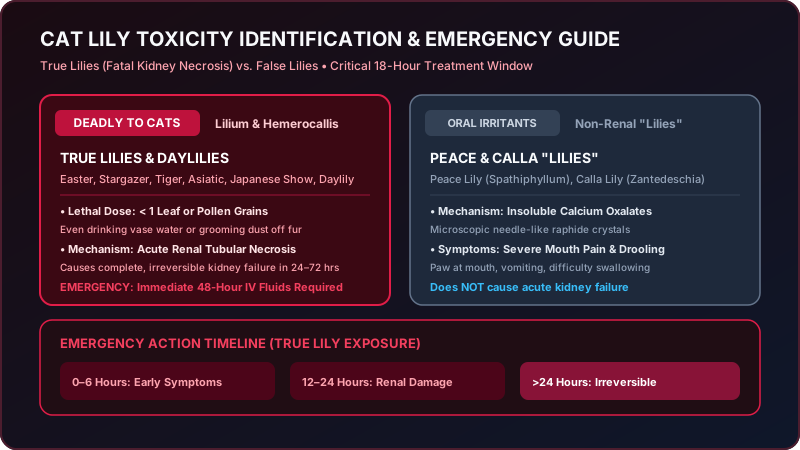
Group 1: DEADLY True Lilies & Daylilies (*Lilium* and *Hemerocallis* genera)
- •Common Examples: Easter Lily (*Lilium longiflorum*), Stargazer Lily, Asiatic Lily, Tiger Lily, Oriental Lily, Rubrum Lily, Japanese Show Lily, Wood Lily, and all garden Daylilies (*Hemerocallis* species).
- •Toxicity: EXTREMELY LETHAL TO CATS.
- •Mechanism: Contains an unidentified water-soluble nephrotoxin that causes necrosis (death) of the kidney's proximal tubular epithelial cells.
- •Lethal Dose: Ingesting less than a single petal, nibbling half a leaf, or licking pollen off a paw is sufficient to cause complete, fatal renal failure within 24 to 72 hours. Dogs do not experience kidney failure from true lilies (only mild stomach upset), making this a cat-specific danger.
Group 2: "False" Lilies (Oral Irritants, NOT Kidney Toxins)
- •Common Examples: Peace Lily (*Spathiphyllum* species) and Calla Lily (*Zantedeschia* species).
- •Toxicity: Mild to moderate oral irritant.
- •Mechanism: Contain needle-shaped insoluble calcium oxalate raphide crystals. When chewed, microscopic crystal needles penetrate the cat's mouth, gums, and tongue, causing intense burning pain, drooling, pawing at the mouth, and vomiting. They do NOT cause kidney failure.
Group 3: Lily of the Valley (*Convallaria majalis*)
- •Toxicity: Cardiovascular toxin.
- •Mechanism: Does not cause kidney failure, but contains cardiac glycosides (similar to digitalis). Causes dangerous heart arrhythmias, severe vomiting, slow heart rate, and collapse.
Assess Lily Exposure Risk with Our Cat Plant Toxicity Calculator
Calculate accurate, personalized recommendations with our free evidence-based tool.
2. Hour-by-Hour Symptom Progression in Cats
When a cat ingests or grooms true lily material, clinical signs progress through three distinct stages:
Stage 1: The Early Gastrointestinal Phase (0 to 6 Hours)
- •Sudden vomiting (often containing flower petals or yellow pollen)
- •Excessive drooling
- •Complete loss of appetite
- •Lethargy (hiding in corners or under furniture)
Stage 2: The False "Honeymoon" & Kidney Onset (6 to 24 Hours)
- •Vomiting may temporarily subside, leading owners into a false sense of security that the cat has recovered.
- •However, inside the kidneys, tubular cells are dying.
- •The cat becomes dehydrated, drinks water excessively, and urinates frequently.
Stage 3: Severe Acute Kidney Failure (24 to 72 Hours)
- •The kidneys shut down completely. Urine production drops to zero or near-zero.
- •Toxins accumulate rapidly in the bloodstream.
- •Low body temperature, painful abdomen, weakness, stumbling, tremors, seizures, and death.
3. Emergency Action Protocol: What to Do Immediately
If you suspect your cat has chewed a lily, been in the same room as an open lily bouquet, or has yellow pollen on its whiskers:
- 1Prevent Further Ingestion Immediately: Gently wash any visible yellow pollen off the cat's fur, face, and paws using warm water and a mild pet shampoo or dish soap. This prevents the cat from grooming the toxin into its stomach on the way to the vet.
- 2Bag the Plant Evidence: Carefully snap a photo of the flower and place a cutting or the fallen leaves in a sealed Ziploc bag so the veterinary emergency staff can confirm the botanical species immediately.
- 3Transport to an Emergency Hospital Instantly: Do not induce vomiting at home (home remedies like hydrogen peroxide cause severe stomach ulceration and bleeding in cats).
- 4The 18-Hour Treatment Window: If aggressive intravenous (IV) fluid therapy is initiated within 18 hours of exposure, survival rates exceed 90%. If veterinary treatment is delayed beyond 24 hours until the cat stops producing urine, the kidney damage is typically irreversible and fatal.
Calculate Daily Cat Hydration & Water Requirements
Calculate accurate, personalized recommendations with our free evidence-based tool.
Reviewed & verified by Dr. Imad Khan, DVM, MSc · Doctor of Veterinary Medicine & Masters in Poultry Science · View editorial credentials →