
Rabbit Feeding & Hay Portions: Daily Guide to Prevent GI Stasis
Master the 80/10/5 rabbit diet. Calculate exact daily hay, leafy green, and pellet portions to prevent life-threatening gastrointestinal (GI) stasis and dental spurs.
Key Technical Takeaways
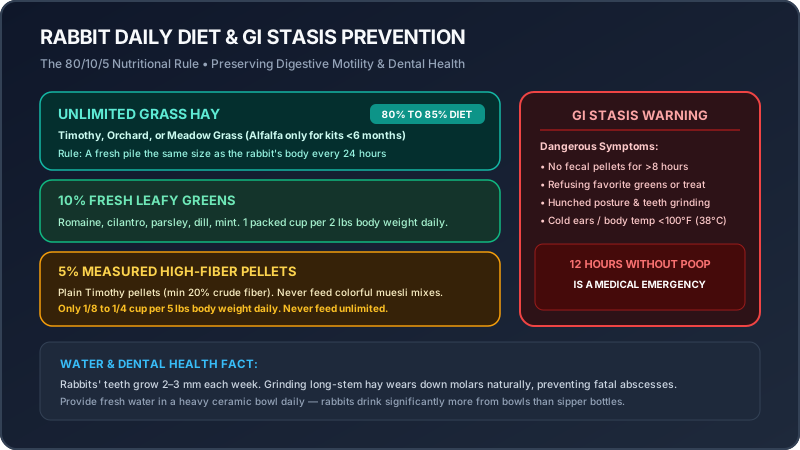
- •Over 80% to 85% of a healthy rabbit diet must be fresh grass hay (Timothy, Meadow, or Orchard grass) supplied continuously.
- •A rabbit must eat a pile of fresh hay equal to its own body size every 24 hours to maintain gut motility and wear down continuously growing teeth.
- •Commercial pellets should be strictly measured (1/8 to 1/4 cup per 2.3 kg / 5 lbs of body weight per day); unlimited pellets cause obesity and gut slowdown.
- •Gastrointestinal (GI) stasis occurs when gut contractions stop: if a rabbit produces no fecal pellets for 12 hours, it is a medical emergency.
- •Never feed rabbits iceberg lettuce, corn, seeds, nuts, or chocolate.
Domestic rabbits have one of the most delicate and specialized digestive systems in the animal kingdom. As hindgut fermenters, rabbits rely on continuous dietary fiber to drive peristaltic contractions in their stomach and cecum.
Feeding an incorrect diet — such as too many pellets, muesli mixes, or sugary fruit — is the leading cause of Gastrointestinal (GI) Stasis and painful dental disease. This practical handbook outlines the essential 80/10/5 feeding rule, safe vs. toxic leafy greens, and how to recognize digestive emergencies.
1. The 80/10/5 Daily Nutrition Rule
Veterinary consensus from the House Rabbit Society and the British Veterinary Association (BVA) recommends the following daily nutritional breakdown for adult rabbits:
- 180% to 85% Grass Hay (Unlimited Daily Access): Timothy hay, orchard grass, meadow hay, or oat hay. Hay provides the indigestible long-strand fiber required to stimulate gut motility and naturally grind down open-rooted teeth that grow 2 to 3 millimeters every week.
- 210% Fresh Leafy Greens: A daily bowl of washed, fresh herbs and dark leafy greens (roughly 1 packed cup per 1 kg / 2 lbs of body weight).
- 35% Measured High-Fiber Pellets: Plain, extruded Timothy-based pellets (at least 20% crude fiber). Never feed commercial muesli mixes containing colorful seeds, corn, or peas (which cause selective feeding and fatal starch enterotoxemia).
- 4Healthy Treats (Under 5%): No more than 1 teaspoon of fresh fruit (apple, blueberry, strawberry) or a thumb-sized slice of carrot per day.
Calculate Healthy Rabbit Weight & Breed Standards
Calculate accurate, personalized recommendations with our free evidence-based tool.
2. Daily Pellet Portioning by Rabbit Size
One of the most common mistakes owners make is filling a rabbit's food bowl with pellets. Adult rabbits fed unlimited pellets become obese, stop eating sufficient hay, and develop cecal sludge.
Use this feeding guideline for adult maintenance (6 months and older):
| Rabbit Size Category | Typical Breeds | Adult Scale Weight | Daily Pellet Ration | Daily Fresh Greens Portion |
|---|---|---|---|---|
| Dwarf / Miniature | Netherland Dwarf, Holland Lop | 0.9 to 1.8 kg (2.0–4.0 lbs) | 1 tablespoon (1/16 cup) | 1 to 2 packed cups |
| Small / Medium | Mini Rex, Dutch, Havana | 2.0 to 3.2 kg (4.5–7.0 lbs) | 1/8 to 1/4 cup | 2 to 3 packed cups |
| Large | New Zealand, Satin, English Spot | 3.6 to 5.0 kg (8.0–11.0 lbs) | 1/4 to 1/3 cup | 4 to 5 packed cups |
| Giant | Flemish Giant, Continental Giant | 5.5 to 8.2+ kg (12.0–18.0+ lbs) | 1/2 cup | 6+ packed cups |
3. Safe vs. Unsafe Greens for Rabbits
Rotate 3 to 4 different fresh greens daily to prevent accumulation of oxalic acid:
- •Excellent Daily Greens: Romaine lettuce, green leaf lettuce, red leaf lettuce, cilantro (coriander), Italian parsley, fresh dill, mint, basil, bok choy, dandelion greens.
- •Moderate Greens (Feed only 1–2 times weekly due to high oxalates or calcium): Spinach, kale, Swiss chard, beet greens, cabbage, broccoli florets.
- •Toxic or Harmful Foods (Never Feed): Iceberg lettuce (contains lactucarium, causing watery diarrhea), onions, garlic, leeks, corn, seeds, nuts, raw beans, rhubarb, avocado, chocolate, human bread/crackers.
4. Understanding GI Stasis: The Silent Killer
Gastrointestinal Stasis occurs when the muscular contractions of the rabbit's stomach and intestines slow down or cease entirely. Dehydrated food and swallowed grooming hair form an immovable impacted mass in the stomach, while gas-producing bacteria multiply uncontrollably, causing excruciating abdominal pain.
Warning Signs of Early GI Stasis:
- •Fecal Pellet Changes: Droppings become small, dry, misshapen, strung together by hair, or stop completely for more than 6 to 8 hours.
- •Refusing Food: The rabbit ignores its morning pellets or favorite fresh greens.
- •Pain Posture: Sitting hunched tightly in a corner with eyes half-closed, pressing the belly against the floor.
- •Loud Tooth Grinding: Slow, loud, grating tooth clicks (distinct from the soft, rhythmic "tooth purring" of a happy rabbit).
- •Hypothermia: Ears and paws feel cold to the touch (normal rabbit body temperature is 101.5°F–103.5°F / 38.6°C–39.7°C).
Track Rabbit Gestation & Kindling Dates
Calculate accurate, personalized recommendations with our free evidence-based tool.
Reviewed & verified by Dr. Imad Khan, DVM, MSc · Doctor of Veterinary Medicine & Masters in Poultry Science · View editorial credentials →