Dog Body Condition Score (BCS 1–9) & Ideal Weight Tool
Evaluates your dog's body condition on the 9-point WSAVA scale and calculates estimated ideal target body weight.
Parameters
Veterinary & Scientific Reference Standard:
This calculated report is generated by AnimalCalculators.com using peer-reviewed physiological, metabolic, and nutritional equations (NRC/WSAVA/FAO). It is intended for educational, clinical, and agricultural guidance.
This calculator provides evidence-based estimates derived from published veterinary equations (NRC, WSAVA, FAO). Outputs are intended for educational and decision-support guidance only. Always consult a licensed veterinarian or qualified specialist for clinical diagnosis, treatment planning, or prescription drug administration.
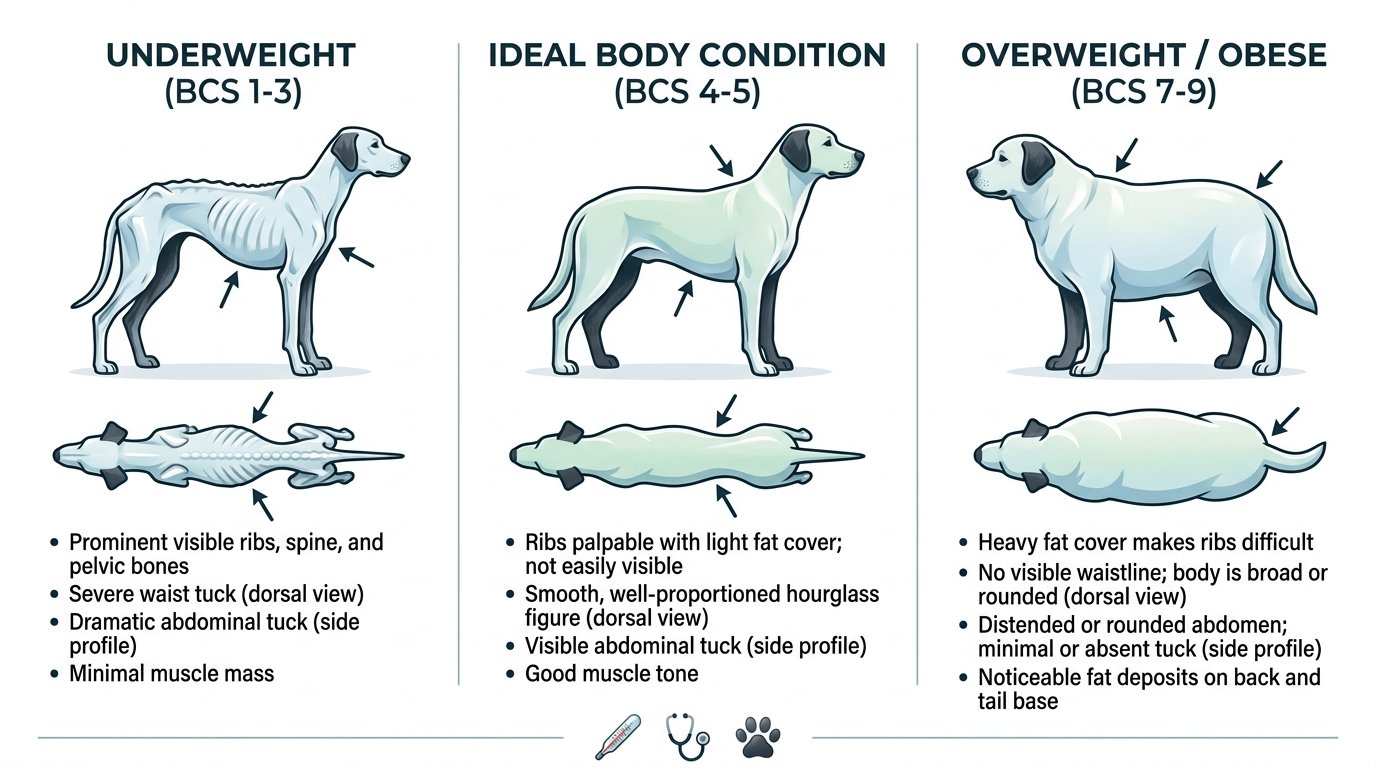
WSAVA Canine Body Condition Score Visual Chart
Official 1–9 Palpation & Visual Inspection Guidelines (Side & Top View)
 Click to enlarge
🟡 Underweight (BCS 1–3)
Ribs, lumbar vertebrae, and pelvic bones easily visible. Dramatic abdominal tuck and zero palpable fat cover.
🟢 Ideal Condition (BCS 4–5)
Ribs easily palpable with light fat cover. Visible hourglass waist behind ribs from above, and distinct abdominal tuck from side.
🔴 Overweight / Obese (BCS 7–9)
Ribs difficult to palpate under thick fat layer. No waistline; rounded back and distended abdomen with fat deposits at tail base.
Understanding the Dog Body Condition Score (BCS 1–9) & Ideal Weight Tool
What This Calculator Does
This body condition score tool helps you assess whether your dog is at a healthy weight. It uses the standard veterinary 1-9 scale to estimate their ideal weight based on their current condition.
How to Use This Calculator
Enter your dog's current weight and select their body condition score based on how they look and feel. The calculator estimates their ideal target weight and tells you if they are carrying excess weight or need to gain some.
Key Factors That Affect the Result
- Your dog's current weight provides the baseline for the calculation.
- The body condition score (how easily you can feel their ribs and see their waist) determines the adjustment factor.
- Muscle mass can affect weight, which is why a visual and physical check is so important.
Why This Matters for Your Dogs
Keeping your dog at an ideal body condition is one of the best things you can do for their long-term health and mobility. Carrying extra weight stresses their joints and organs, while being underweight can signal health issues. This tool helps you recognise where your dog stands.
Veterinary Advisory: This calculator provides educational guidance only and is not a substitute for professional veterinary advice. If you have any concerns about your dog's health or wellbeing, please contact a licensed veterinarian.
Reviewed & verified by Dr. Imad Khan, DVM, MSc · Doctor of Veterinary Medicine & Masters in Poultry Science · View editorial credentials →
Formula & Mathematical Methodology
Formula Variables Defined
1 (Emaciated) to 9 (Severely Obese), where 4-5 is Ideal
Step-by-Step Calculation Example
A 32 kg (70 lb) dog with BCS 7 (Heavy / Overweight).
- BCS 7 is 2 points above ideal (BCS 5)
- Each point represents roughly ~10% excess body weight
- Ideal Weight = 31.75 kg ÷ 1.20 = ~26.4 kg (58.3 lbs)
Key Assumptions
- Visual and palpation assessment aligns with WSAVA physical guidelines.
Biological Limitations
Verified Scientific & Veterinary Sources
Dog Body Condition Score (BCS 1–9) & Ideal Weight Tool — FAQs
Related Calculators & Tools
All Dogs CalculatorsCalculates the Resting Energy Requirement (RER) and Maintenance Energy Requirement (MER) for adult dogs and growing puppies using official National Research Council (NRC) equations.
Calculates the recommended daily caloric target and projected timeline for safe dog weight loss without muscle wasting.