
Dog Chocolate Toxicity Calculator
Evaluates the milligram per kilogram (mg/kg) methylxanthine (theobromine & caffeine) dose ingested to determine clinical toxicity threat level for canines.
Parameters
Veterinary & Scientific Reference Standard:
This calculated report is generated by AnimalCalculators.com using peer-reviewed physiological, metabolic, and nutritional equations (NRC/WSAVA/FAO). It is intended for educational, clinical, and agricultural guidance.
This calculator provides evidence-based estimates derived from published veterinary equations (NRC, WSAVA, FAO). Outputs are intended for educational and decision-support guidance only. Always consult a licensed veterinarian or qualified specialist for clinical diagnosis, treatment planning, or prescription drug administration.
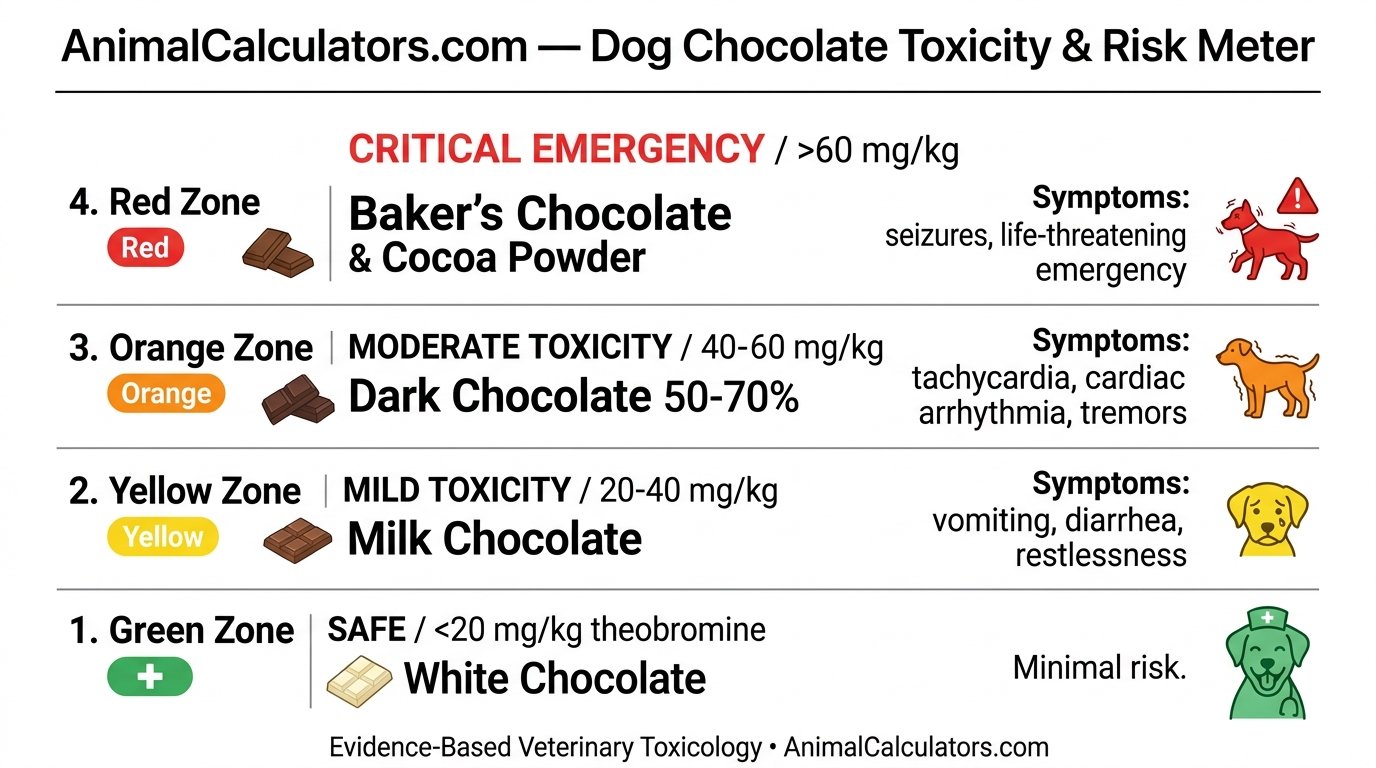
Canine Theobromine Toxicity Emergency Risk Scale
Veterinary toxicological thresholds & active symptom progression
 Click to enlarge
🟢 1. Green Zone (<20 mg/kg)
White chocolate. Minimal toxicity risk. Loose stools possible from fat.
🟡 2. Yellow Zone (20–40 mg/kg)
Milk chocolate. Mild toxicity: Vomiting, diarrhea, restlessness, polydipsia.
🟠 3. Orange Zone (40–60 mg/kg)
Dark chocolate (50–70%). Tachycardia, cardiac arrhythmia, muscle tremors.
🔴 4. Red Zone (>60 mg/kg)
Baker's & Cocoa powder. Critical emergency: Seizures, collapse, urgent vet care.
Understanding the Dog Chocolate Toxicity Calculator
What This Calculator Does
This chocolate safety checker helps dog owners understand whether the amount of chocolate their dog has consumed may need veterinary attention. It uses established theobromine exposure thresholds to give you a risk assessment, so you know when to act quickly and when calm monitoring is appropriate.
How to Use This Calculator
Enter your dog's weight and the type and amount of chocolate consumed. The calculator estimates the theobromine exposure level and categorises it into a risk tier — from low-concern through to high-concern — so you can make an informed decision about next steps.
Key Factors That Affect the Result
- Type of chocolate matters most: dark chocolate and baking chocolate contain significantly more theobromine per gram than milk chocolate or white chocolate.
- Your dog's body weight is the other key variable — a small amount of chocolate has more impact on a small dog than a large one.
- Time since ingestion is important: if it has been less than two hours, a vet may be able to help reduce absorption.
- Pre-existing health conditions such as heart problems or seizure disorders may lower the concern threshold.
Why This Matters for Your Dogs
Knowing the relative risk level of a chocolate exposure helps dog owners make calm, informed decisions rather than panicking or underreacting. Most chocolate exposures — especially involving milk chocolate — fall into lower-risk categories and benefit from simple monitoring and hydration. For higher-risk exposures, prompt veterinary contact gives vets the best chance to help. This tool helps you understand which situation you are in.
Veterinary Advisory: This calculator provides educational risk-level guidance only and is not a substitute for veterinary advice. If your dog has consumed chocolate and you are concerned, always contact your veterinarian or an animal poison control service. They can provide specific guidance based on your dog's full health profile.
Reviewed & verified by Dr. Imad Khan, DVM, MSc · Doctor of Veterinary Medicine & Masters in Poultry Science · View editorial credentials →
Formula & Mathematical Methodology
Formula Variables Defined
Dog body weight
Estimated amount of chocolate eaten
White (0.25 mg/oz), Milk (58 mg/oz), Dark 50-70% (160 mg/oz), Baker's (400 mg/oz), Cocoa Powder (737 mg/oz)
Step-by-Step Calculation Example
A 13.6 kg (30 lb) dog eats a 57 g (2 oz) bar of 70% dark chocolate.
- Dog weight: 13.61 kg (30 lbs)
- Dark chocolate theobromine content = ~160 mg/oz (5.6 mg/g)
- Total dose eaten: 2 oz (57 g) × 160 mg/oz = 320 mg
- Weight-based dose: 320 mg ÷ 13.61 kg = 23.5 mg/kg (Veterinary advice recommended)
Key Assumptions
- Ingestion occurred recently (within the past 1–4 hours).
Biological Limitations
- Individual sensitivity varies. Dogs with pre-existing cardiac disease or seizure disorders are at significantly higher risk at lower doses.
Verified Scientific & Veterinary Sources
Dog Chocolate Toxicity Calculator — FAQs
Related Calculators & Tools
All Dogs CalculatorsCalculates the Resting Energy Requirement (RER) and Maintenance Energy Requirement (MER) for adult dogs and growing puppies using official National Research Council (NRC) equations.
Assesses emergency poisoning risk and clinical thresholds for dogs that ingest xylitol (birch sugar/wood sugar) from sugar-free chewing gum, candy, peanut butter, or baked goods.
Emergency veterinary calculation of 3% hydrogen peroxide dosage (ml, tsp, tbsp) to induce vomiting in dogs after toxin ingestion, including strict safety limits.