
Dog Pregnancy Guide: Week-by-Week Development & Whelping Timeline
A comprehensive, veterinary-backed developmental calendar tracking dog pregnancy from day 1 mating through 63-day whelping and labor care.
Key Technical Takeaways
- •Canine pregnancy lasts an average of 63 days (9 weeks), with healthy deliveries occurring between Days 58 and 68.
- •Veterinary ultrasounds confirm beating hearts between Days 25 and 35; abdominal X-rays count puppy skeletons after Day 45.
- •Puppies do roughly 75% of their rapid growth in the final 3 weeks; mothers require high-calorie puppy food starting at Day 42.
- •A rectal temperature drop below 99°F (37.2°C) is the most reliable clinical signal that active labor will start within 12 to 24 hours.
Finding out that your dog is expecting puppies is an exciting and emotional experience. Whether you are a responsible preservation breeder or caring for an unexpected litter, understanding what is happening inside your dog’s body week-by-week allows you to provide the best prenatal nutrition, timely veterinary checkups, and a calm, safe whelping environment.
A female dog's pregnancy (gestation) averages 63 days (9 weeks) from the date of ovulation or first breeding, though normal, healthy litters can arrive safely anytime between Day 58 and Day 68.
You can track your dog's exact delivery window and milestones using our interactive Dog Pregnancy & Whelping Due Date Calculator.
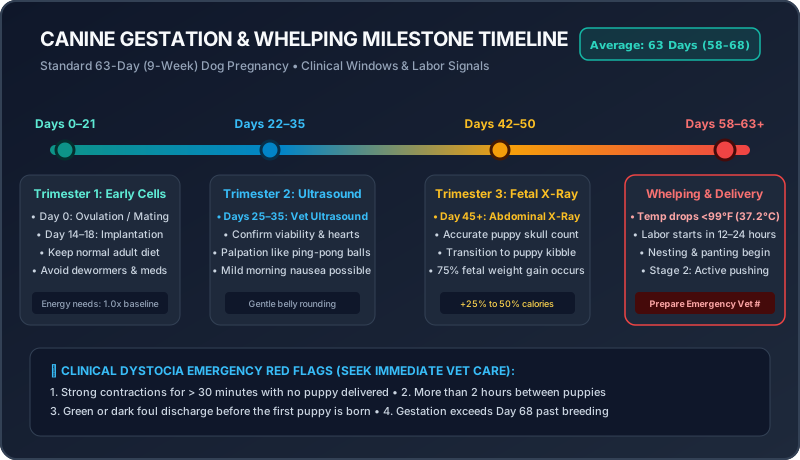
1. The Three Trimesters of Canine Pregnancy
A dog's gestation is divided into three distinct biological trimesters, each lasting approximately three weeks (21 days):
| Trimester | Timeframe | Primary Biological Events | Mother's Care Focus |
|---|---|---|---|
| First Trimester | Days 0 to 21 (Weeks 1–3) | Fertilization in oviducts, cell division, uterine migration and blastocyst implantation | Maintain normal adult maintenance diet; regular gentle exercise; avoid all unnecessary medications or flea baths |
| Second Trimester | Days 22 to 42 (Weeks 4–6) | Embryos develop organs, heartbeats, claws, and spinal columns; fetal sacs become palpable | Vet ultrasound at Days 25–35; possible morning sickness; gentle belly widening |
| Third Trimester | Days 43 to 63+ (Weeks 7–9) | 75% of fetal puppy weight gain; bone calcification; nesting behavior begins | Switch gradually to high-protein puppy food; vet X-ray for puppy count; prepare whelping box; check rectal temperature |
2. Week-by-Week Fetal Development Calendar
Week 1 (Days 0 to 7): Fertilization
During the first week following breeding, sperm travel up the uterine horns to fertilize the eggs in the oviducts. Fertilized zygotes begin rapid cellular division. Externally, your dog will look and behave completely normal. Keep her routine stress-free and avoid strenuous training or changes in diet.
Week 2 (Days 8 to 14): Migration to the Uterine Horns
The growing blastocysts travel down into the uterine horns, spacing themselves out evenly along the walls. Continue feeding her standard high-quality adult dog food. Do not add extra calcium supplements, as excess calcium during early pregnancy interferes with her natural parathyroid hormone balance and increases the risk of life-threatening eclampsia (milk fever) during nursing.
Week 3 (Days 15 to 21): Implantation
Around Days 16 to 18, the delicate embryos firmly implant into the uterine lining (endometrium), forming the beginnings of individual placentas. Some females experience mild hormonal shifts resembling "morning sickness"—they may turn their nose up at breakfast or seem slightly lethargic for a few days. Offer small, frequent meals if her appetite dips temporarily.
Week 4 (Days 22 to 28): The Ultrasound Window
By Day 25, developing embryos have distinct heartbeats and measure about the size of a walnut. Days 25 to 35 are the ideal window for your veterinarian to perform a confirmation ultrasound. Your vet can confirm viable heartbeats and check that gestational sacs are healthy. Experienced veterinarians can also gently palpate the abdomen to feel individual walnut-sized swellings.
Week 5 (Days 29 to 35): Organ Formation & Claws
During Week 5, embryos enter the fetal stage. Eyelids, whiskers, toes, and internal organs take shape. Fetal weight increases steadily, and the mother's abdomen will start to look slightly rounded, especially if she is carrying a large litter. Her nipples may become pinker and more prominent.
Week 6 (Days 36 to 42): Growth Accelerates
Puppy claws, skin pigmentation, and whiskers continue developing. The mother's appetite will begin to climb noticeably. At the end of Week 6 (around Day 42), begin gradually transitioning her to an AAFCO-approved, calorie-dense puppy kibble. Mix 25% puppy food with 75% adult food for a few days, gradually moving to 100% puppy food over a week.
Week 7 (Days 43 to 49): Skeletal Calcification & X-Rays
Around Day 45, puppy skeletons begin to calcify and absorb calcium into their bones. Veterinarians can now take abdominal radiographs (X-rays) to count puppy skulls and spines accurately. Knowing the exact puppy count in advance is essential: if your dog delivers 4 puppies but the X-ray showed 5, you know immediately that a puppy is retained and requires veterinary intervention.
Week 8 (Days 50 to 56): Setting Up the Whelping Box
Puppies are now fully formed and growing fur. You may be able to see or feel gentle rippling movements in the mother's belly when she lies on her side. Set up her whelping box in a warm, quiet, draft-free room so she has at least one to two weeks to nest and feel safe inside it. Line it with washable towels or vet fleece.
Week 9 (Days 57 to 63+): Imminent Delivery & Labor
Puppies move into the birthing canal. Starting on Day 56, take your dog's rectal temperature twice daily (morning and evening) with a digital pet thermometer and record the readings.
3. How to Spot the Pre-Labor Temperature Drop
A healthy dog's normal resting rectal temperature ranges between 101.0°F and 102.5°F (38.3°C to 39.2°C).
Roughly 12 to 24 hours before active stage-two labor begins, the mother's progesterone levels drop abruptly, triggering a distinct drop in body temperature:
- •The Clinical Labor Indicator: When her temperature dips below 99.0°F (37.2°C)—often reaching 97.5°F to 98.5°F—active whelping almost always begins within 12 to 24 hours.
Other hallmark signs of approaching labor include:
- •Restless nesting, digging frantically in blankets or laundry piles
- •Refusing meals or treats 12 to 24 hours before whelping
- •Panting, shivering, pacing, and looking back at her flank
- •Clear, odorless mucous discharge from the vulva
4. Post-Whelping Nutrition & Puppy Care
Once the puppies have arrived, the mother enters peak lactation—the most nutritionally demanding period of any canine life stage. A nursing mother may require 200% to 400% of her normal pre-pregnancy calories to nourish a hungry litter without losing muscle mass.
Keep fresh, high-protein puppy kibble and clean water available to her free-choice at all times. As the puppies grow, use our Puppy Weight & Adult Size Predictor to track their weekly growth milestones and ensure they are gaining weight on schedule.
Calculate Daily Nursing Dog Calories & Food Amounts
Calculate accurate, personalized recommendations with our free evidence-based tool.