
Horse Pregnancy & Foaling: Due Date Calendar, Signs & What to Expect
A practical foaling calendar guide for horse owners. Calculate your mare's due date, understand the 3 stages of labor, watch for waxing, and know the 1-2-3 post-foaling rule.
Key Technical Takeaways
- •Average horse gestation is 340 days (roughly 11 months), but normal healthy foaling ranges from 320 to 365 days.
- •Over 60% of fetal growth occurs during the final 90 days of pregnancy, requiring elevated protein and mineral intake.
- •"Waxing" of the teats (amber drops of dried colostrum) usually indicates foaling will occur within 24 to 48 hours.
- •Active stage-two labor in horses is rapid, typically lasting only 15 to 30 minutes from the water breaking to full delivery.
- •Remember the "1-2-3 Rule" after delivery: stand within 1 hour, nurse within 2 hours, pass placenta within 3 hours.
A pregnant mare (female horse) requires careful planning, dedicated monitoring, and nutritional adjustments to ensure a safe delivery for both mother and foal. A horse pregnancy lasts an average of 340 days — approximately 11 months — though normal full-term foaling can safely occur anywhere between 320 and 365 days.
This comprehensive guide breaks down the horse pregnancy timeline, the physical signs that labor is approaching, what happens during delivery, and the critical steps you must take immediately after birth.
1. Calculating Your Mare's Due Date
Because mare pregnancies vary more than human pregnancies, calculating an expected foaling date provides an estimated target rather than an exact deadline. Veterinary medicine considers any foal born before day 320 premature, while pregnancies extending past day 365 warrant close veterinary monitoring.
What Factors Influence Gestation Length?
- •Month of Conception: Mares bred early in the year (January through March) carry an average of 5 to 10 days longer than mares bred during long summer days, due to seasonal photoperiod cues.
- •Gender of the Foal: Colt foals (males) are carried approximately 2 to 7 days longer than filly foals (females).
- •Individual Mare History: Many mares establish their own consistent personal gestation schedule across multiple pregnancies.
Calculate Your Mare's Foaling Due Date
Calculate accurate, personalized recommendations with our free evidence-based tool.
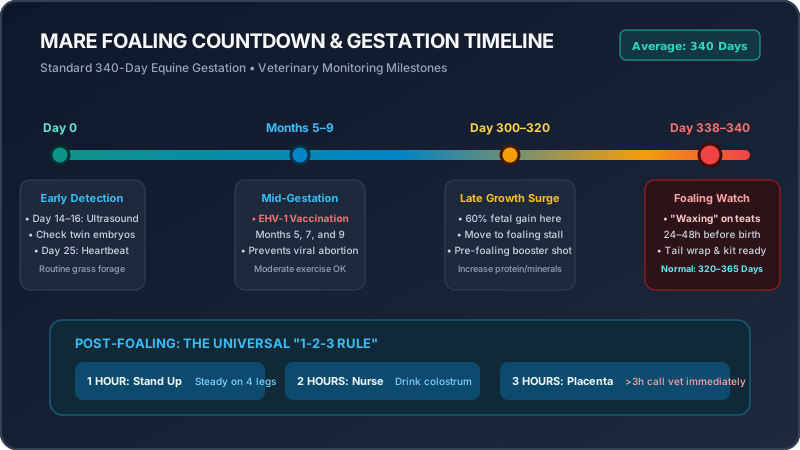
2. Month-by-Month Gestation & Care Milestones
Managing a pregnant mare changes drastically as the foal develops. The 11-month timeline divides into three key stages:
| Gestation Stage | Development Milestones | Essential Management Tasks |
|---|---|---|
| Months 1 to 4 (Early Gestation) | Embryo implantation occurs around Day 16. Heartbeat detectable by ultrasound by Day 25. | Vet ultrasound check at Days 14–16 to confirm pregnancy and check for twins (twin pregnancies in horses are life-threatening and must be reduced). Normal maintenance feeding. |
| Months 5 to 8 (Mid Gestation) | Foal reaches roughly 20% of its final birth weight. Organ systems develop rapidly. | Routine exercise and standard good-quality grass forage. Administer Pneumabort-K (EHV-1 vaccination) at Months 5, 7, and 9 to prevent viral abortion. |
| Months 9 to 11 (Late Gestation) | Fetal growth surge: over 60% of total birth weight is gained in the final 90 days. | Increase energy and crude protein rations. Move mare to foaling location 4–6 weeks before due date to build local antibody immunity. |
3. Physical Signs of Approaching Foaling
During the final month, a mare's body undergoes distinct anatomical changes as parturition approaches:
- 1Abdominal Dropping (3 to 4 weeks prior): The mare's belly changes shape from a wide barrel to a pear-shaped, dropped abdomen as the foal shifts toward the birth canal.
- 2Pelvic Ligament Relaxation (1 to 2 weeks prior): The muscles and ligaments flanking the tailhead become soft and sponge-like to the touch, and the vulva visibly lengthens and relaxes.
- 3Udder Enlargement ("Bagging Up", 2 to 4 weeks prior): The mammary glands fill with clear-to-amber fluid, becoming firm and distended.
- 4"Waxing" of the Teats (24 to 48 hours prior): Small droplets of thick, yellow, dried colostrum form at the tip of each teat, resembling drops of candle wax. This is one of the most reliable visual indicators that foaling is imminent.
- 5Milk Calcium Shift (12 to 24 hours prior): Testing milk droplets with water-hardness test strips shows a sharp rise in calcium (exceeding 200 ppm), signaling >90% probability of foaling within 24 hours.
4. The Three Stages of Horse Labor
Unlike human labor, which can take hours or days, horse stage-two delivery is rapid and intense.
Stage 1: Preparation & Contractions (1 to 4 Hours)
- •What you see: Restlessness, pacing, sweating behind the elbows, pawing the bedding, looking at flanks, frequent urination, and lying down then standing back up repeatedly.
- •What is happening: The foal rotates into the correct diving position (front feet first, soles pointed downward, nose resting between front knees), and uterine contractions begin.
- •Your action: Wrap the mare's tail with a clean polo wrap, wash her vulva and hindquarters with warm water, and observe quietly from a distance without causing stress.
Stage 2: Active Delivery (15 to 30 Minutes)
- •What you see: The mare's water breaks (sudden release of allantoic fluid). The mare typically lies flat on her side and pushes forcefully.
- •The presentation: Within 5 to 10 minutes, a white, glistening membrane (the amnion) appears at the vulva, followed by one front hoof, the second front hoof slightly behind it, and then the foal's muzzle.
- •The timeline: Delivery is normally complete within 20 to 30 minutes.
Stage 3: Passing the Placenta (1 to 3 Hours)
- •What happens: The mare stands, and uterine contractions expel the afterbirth.
- •Your action: Tie the hanging placenta up in a knot with baling twine so the mare does not step on it or rip it. Once passed, save the placenta in a clean bucket for your veterinarian to inspect.
- •Warning: If the placenta has not passed within 3 hours, call your veterinarian. A retained horse placenta can cause life-threatening toxic infection and laminitis within 12 hours.
5. The Critical "1-2-3 Rule" for Newborn Foals
Memorize the universal veterinary milestone checklist for the newborn foal:
- 1Within 1 Hour — Standing: The foal should achieve sternal recumbency within minutes and stand steadily on all four legs within 60 minutes.
- 2Within 2 Hours — Nursing Colostrum: The foal must nurse successfully from the mare's udder. Colostrum provides essential antibodies that the foal cannot produce on its own.
- 3Within 3 Hours — Passing the Placenta & Meconium: The mare must expel the full placenta, and the foal should begin passing meconium (dark, tarry first stool).
6. The Essential Barn Foaling Kit
Before your mare reaches Day 320, assemble a clean, sealed container in your tack room containing:
- •Clean tail wraps: Elastic bandages to keep tail hair clear of the vulva.
- •Chlorhexidine or mild soap: For washing hindquarters.
- •Dilute Betadine or 0.5% Chlorhexidine dip: To submerge and sanitize the foal's umbilical stump twice daily for 3 days.
- •Clean towels: Several large clean towels to dry the foal's head and stimulate breathing.
- •Exam gloves and lube: In case of emergency presentation checks.
- •Flashlight with fresh batteries: For nighttime pasture checks.
- •Emergency Vet phone number: Programmed into your mobile phone on speed dial.
Use Our Horse Pregnancy Calculator to Track Due Dates
Calculate accurate, personalized recommendations with our free evidence-based tool.
Reviewed & verified by Dr. Imad Khan, DVM, MSc · Doctor of Veterinary Medicine & Masters in Poultry Science · View editorial credentials →